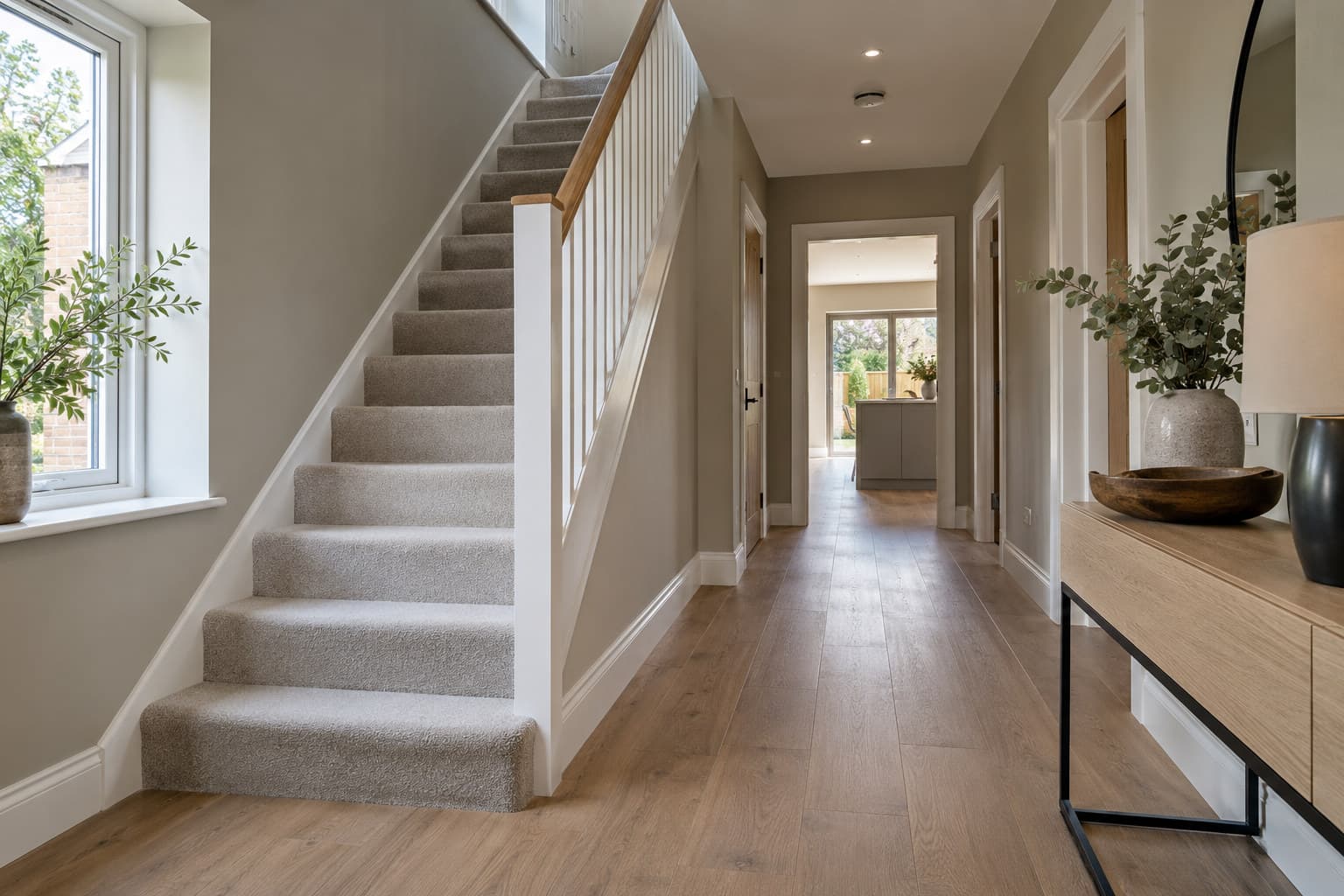
A snagging checklist that gets finished is one short enough to carry round the house in one go, room by room, with a photo of every fault as you find it.
Why long checklists don’t get finished
Most snagging checklists online run to a hundred items or more. They are thorough, and that is exactly the problem. Nobody walks a three bedroom house with a hundred line printout, checking each one off room by room. The list gets abandoned halfway round, usually after the kitchen, and the upstairs never gets the same scrutiny as the downstairs.
A checklist only has value if it gets completed. The short version below covers the faults that actually turn up in new build homes, organised so you can hold it in your head rather than in your hand.
The short checklist, room by room
Walk the property in one direction, room to room, and check the same six things everywhere. That consistency matters more than any extra detail.
- Walls and ceilings: cracks, uneven plaster, paint runs or patchy coverage
- Floors: gaps at skirting, uneven boards, loose tiles, carpet seams
- Windows and doors: open and close properly, seals intact, no draughts
- Fixtures: sockets, switches, taps and handles all secure and working
- Sealant and finishing: gaps round baths, sinks, worktops and frames
- Outside: render, guttering, fencing, paths and drainage near the house
Add the kitchen and bathrooms as their own pass, since they carry the most fittings and the most things that can be slightly wrong: extractor fans, waste pipes, cupboard doors, worktop joins.
How to record what you find
A list of words without photos is hard for anyone to act on later, including you. For each defect, take a photo that shows the fault clearly, note which room it is in, and say in a sentence what is wrong. That is enough for a builder or developer to locate and assess it.
This is where an app like SayScope earns its place over a paper list. You photograph the defect, circle it on the photo, hold a button and say what is wrong, and it sorts everything by room and by trade automatically. Visits are free and unlimited, and each account gets one report a week free, with up to 10 items. A bigger visit, or a second report the same week, needs a paid plan.
When to do this walk
The best time is before legal completion, while you still have leverage to get things addressed. Under the New Homes Quality Code Version 2 (March 2026), buyers have a right to a pre-completion inspection, and can appoint a professional from a recognised body such as CABE, CIOB, ICWCI, RICS or RPSA with professional indemnity insurance, or carry it out themselves using the NHQB checklist.
Where issues breach warranty technical standards, the code states the developer addresses them ideally before legal completion or within 30 days. A second walk a few weeks after moving in catches anything that only shows up once the house has been lived in, such as doors sticking as they settle or snags missed on a rushed handover day.
DIY list or a professional snag
This short checklist is enough for most homeowners to do a competent first pass themselves. A professional snagging survey typically costs £300 to £600 depending on property size, and is worth considering if you want a second opinion, if the build quality feels inconsistent, or if you simply do not have the time to do a thorough walk yourself.